Home / Plywood applications
Vietnam Plywood by Application: The Build Each Job Needs
A formwork panel and a cabinet side can both be 18 mm acacia plywood and still share nothing else. Start from the job, and the glue, face, core and tolerance follow.
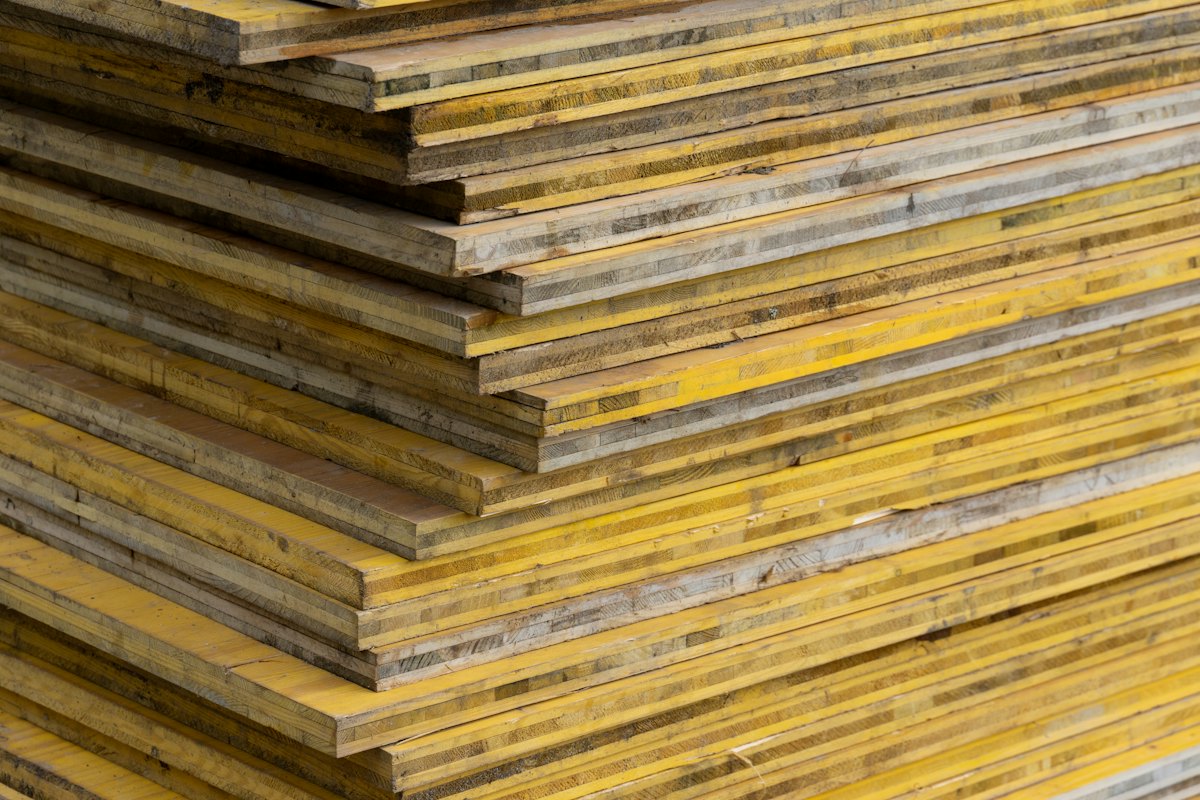
Typical build by end use
Starting points that Vietnamese mills commonly quote for each job, not a promise. Your load, finish and market decide the final specification. Thickness ranges are typical.
| End use | Product | Core | Glue | Face | Typical thickness |
|---|---|---|---|---|---|
| Concrete formwork | Film faced plywood | Eucalyptus or acacia hardwood core | WBP phenolic | Phenolic film both faces, edges sealed | 12 to 21 mm |
| Export crates and machinery cases | Packing plywood | Mixed plantation hardwood | MR or melamine | Utility face, unsanded or light sand | 5 to 18 mm |
| Cabinet carcases and furniture | Commercial or veneered plywood | Acacia or rubberwood, full core | MR or melamine, emission class by market | B/BB sanded or decorative veneer | 15 or 18 mm carcases, 3 to 6 mm backs |
| Shopfitting and display | Commercial, veneered or melamine faced | Full hardwood core, low voids | Melamine or MR | A or B face, or melamine paper | 9 to 25 mm |
| Truck and trailer floors | Flooring plywood | Dense hardwood core | WBP phenolic | Film or anti slip overlay | 12 to 28 mm by vehicle |
| Floor underlayment | Sanded thin plywood | Even, void free core | MR or melamine for dry floors | Sanded flat face | 6 to 12 mm |
| Door skins and door cores | Thin and commercial plywood | Acacia or rubberwood | MR or melamine | Paint or veneer grade face | 2.5 to 6 mm skins |
| CNC, laser and craft parts | Thin calibrated plywood | Light, void free plies | Glue that cuts cleanly | Even, light face | 3 to 6 mm, 3 to 5 plies |
| Speaker boxes | Hardwood core plywood | Dense, void free core | MR or melamine | Paint or veneer grade | 15, 18 or 25 mm |
Cores, faces and glues are explained on the plywood materials page. Sheet sizes are usually 1220 x 2440 mm or 1250 x 2500 mm.
Three groups of buyers, three kinds of mill
A mill set up for formwork rarely presses good furniture faces, and the reverse. Name the end use in the first line of your enquiry so it reaches the right line.
Construction and transport
Formwork, site hoarding and vehicle floors. Bond, core density and edge sealing matter more than looks. Phenolic glue throughout.
Packaging
Crate walls, pallet tops and machinery cases. Utility faces and actual thickness matter. The crate's solid wood parts need ISPM 15, the panels do not.
Furniture and interiors
Carcases, shopfitting, doors and CNC parts. Face grade, calibrated thickness and emission class decide the order.
Formwork and flooring
Both jobs get wet, take load and wear. Both need a phenolic bond and a dense core. The difference is the surface: smooth film for a concrete face, an anti slip overlay for a floor.
- Film weightTypically 120, 220 or 440 g/m2. Heavier film usually gives more pours.
- EdgesSealed with paint or resin, because water enters through the edge first.
- CoreFull hardwood, no combi centres, voids limited on the cut edge.
- FloorsThickness by vehicle and load, typically 12 to 28 mm, plus support spacing.
Furniture, cabinets and shopfitting
Here the panel is seen, cut and edge banded. Flatness and the face decide rejects, and the emission class decides whether the product can be sold at all.
- FaceA or B for clear finish, BB under paint, CP under laminate or melamine.
- ThicknessCalibrated sanding for parts that are CNC cut or edge banded.
- EmissionCARB P2 or TSCA Title VI for the US, E1 or E0 for the EU, F four star for Japan.
- RouteTwo time pressing gives a flatter face where telegraphing would show. See plywood manufacturing.
Packing and crating
The cheapest plywood a mill presses, and the job where actual thickness is checked least and matters most. A nominal 9 mm panel that arrives thin loses stiffness and nail holding at the edge.
- Order to actualState actual thickness and tolerance, not only the nominal size.
- GlueMR is usual. Melamine fortified when crates sit in humid storage or ship by sea.
- ISPM 15Applies to the solid wood in the crate, not to the plywood panels. See the IPPC standards.
- Pallet decksOne way pallets take standard packing plywood. Repeated forklift use needs a denser core.
Questions about plywood applications
We are a sourcing service, not a mill. Tell us the end use first and we pass the specification to up to 3 Vietnamese mills that already press for that job, replying within 24 business hours.
Which plywood is used for concrete formwork?
Film faced plywood with a WBP phenolic bond, a hardwood core and sealed edges, typically 12 to 21 mm. The number of pours depends on the film weight, the glue, the core and how the site handles the panels, so state the film weight in g/m2 and the reuse you expect.
Do plywood panels in an export crate need ISPM 15 treatment?
No. ISPM 15 applies to solid wood packaging material. Plywood is a processed wood product and is outside it. The solid wood skids, battens and frames of the crate do need ISPM 15 treatment and marking.
What plywood should I use for kitchen cabinets?
Furniture grade plywood with a full hardwood core, a sanded B face or a decorative veneer, and the emission class your market requires. Carcases are usually 15 or 18 mm and backs 3 to 6 mm. For humid kitchens a melamine fortified glue is safer than plain MR.
Can Vietnamese plywood be used structurally?
Only when the panel is made, tested and marked to the structural standard of the market, such as EN 636 with CE marking in the EU or AS/NZS 2269 in Australia. Commercial plywood is not tested to carry design loads. Ask for the test report and marking before you use any panel in a structure.
Guides by end use
- Specification
How to Specify Film Faced Plywood from Vietnam
Film weight, core build, bond, edge sealing and pours. What to write in a film faced plywood enquiry so the panels you receive match the sample you approved.
- Specification
Formwork Plywood Reuse: What Sets the Number of Pours and How to Count It
Pours per panel depend on film, glue, core, edges and site handling. See typical reuse ranges, what shortens them and how to compare panels by cost per pour.
- Specification
Packing Plywood: The Cheapest Grade, Specified Properly
How to buy packing plywood for crates, cases and pallets from Vietnam, which specification lines matter at the bottom of the range, and where ISPM 15 fits.
- Specification
Furniture Grade Plywood for Cabinets: A Spec Sheet in Plain Words
Cabinet makers need flat, void-free, clean-cutting plywood. See which thickness suits each part, which defects matter and how to write a furniture grade spec.
- Specification
Plywood for Laser Cutting: Core, Glue and Thickness That Cut Clean
Laser cut plywood needs flat sheets, an even thickness and a core without gaps. See which glue, ply count and thickness cut cleanest and what to specify.
Know the job the panel has to do?
Send end use, product, core, glue, face grade, thickness and quantity. We pass it to mills that press for that job and reply within 24 business hours.